Photo by Kaboom Pics
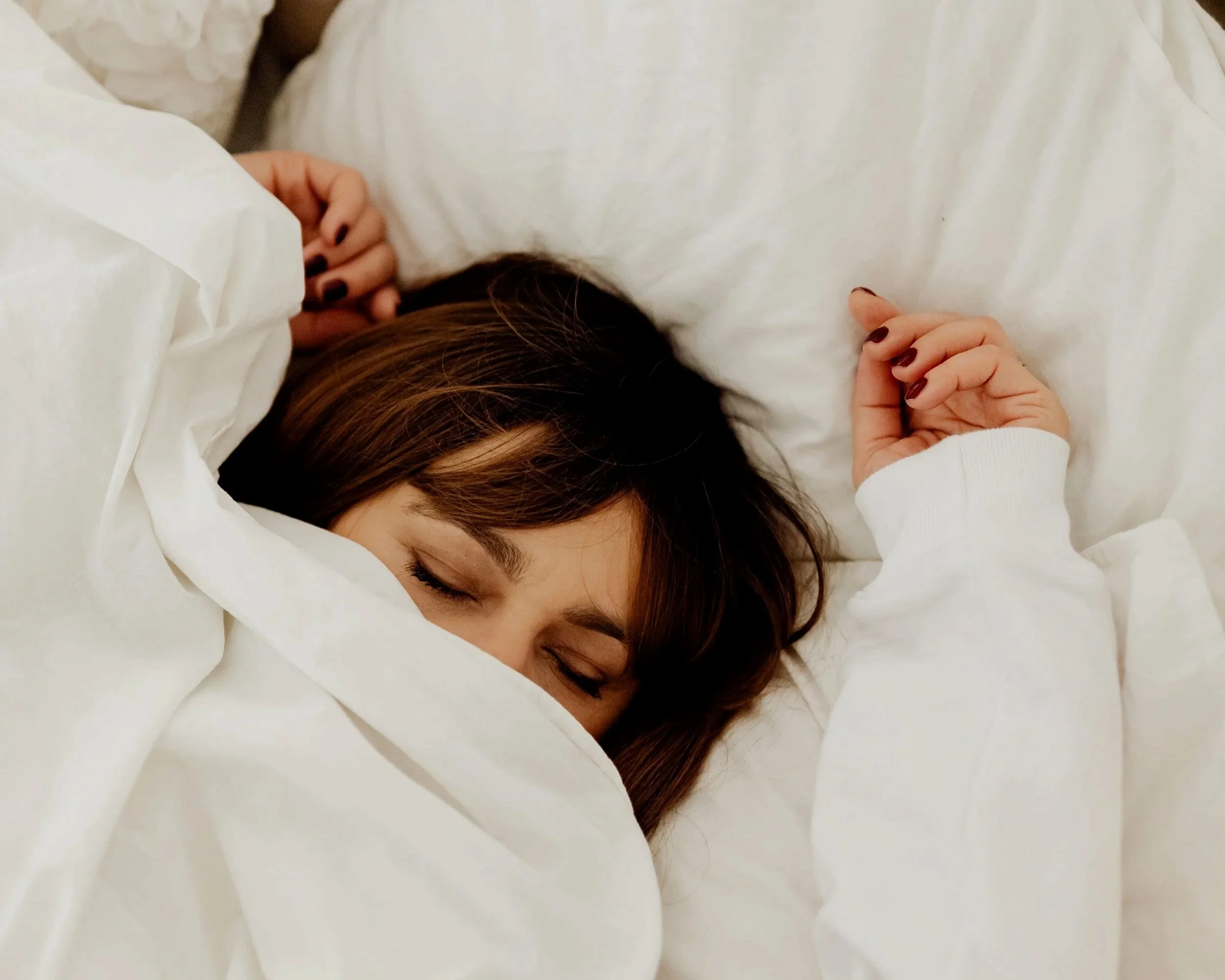
Insomnia weds me to headphones. Call it a marriage of convenience, necessity even, as my darkened bedroom summons, like a spell, anxieties and conjured demons that party till dawn.
Like you, probably, I have no real problems. I live a comfy life with countless luxuries and freedoms. My own grandparents, giddy at indoor plumbing and the polio vaccine, would marvel at this charmed world. Despite (because of?) the windfall of living in modern times, I am forced, like you, probably, to make up problems. Or maybe they are problems, but they are miniscule. Or maybe they are problems, but I can’t fix them. No matter! Add ‘em to the list!
Regardless, I craft them, and like a vampire or a toxic fungus, I do my best work in the dark. Sometimes, falling asleep is the challenge; other times, I awaken at 2 a.m. to blearily battle the DIY boogeymen. My morning alarm declares a ceasefire, and I shuffle to the Keurig, wounded soldier limping to field hospital.
I am not alone.
Imagined problems or not, insomnia is real, and common. One third of adults report sleep issues, with higher prevalence in women, older adults, and, unsurprisingly, those abreast of current events. (Huzzah, she crows, sweeping the Trifecta of Sleep Deniers.) The global sleep-aids market, as a result, is wide awake; recent valuations clock it a 97-billion dollar industry, projected to surge to 150 billion in the next five years. Specialized pillows, sleep trackers, supplements, and pharmaceuticals woo customers eager to swap $s for Zs.
You may swear by melatonin or a nice Cabernet, but I need someone telling me something softly, boring even, to distract me from me. For years, my drug of choice was the BBC World News, a current events line-up dealt in a gentle British lilt, a palatable way to absorb the prickly news, the way I wrap my dog’s heart-worm pill in a fold of cheese. Eventually, there was not enough cheese to make the pill of worldly existence tolerable, so I defected, seeking new refuge.
Enter: the podcast.
A staggering number of purposeful sleep-inducing podcasts exists. I like the history ones, but the drowsy buffet caters to all tastes: adult bedtime stories, ASMR, one that reads outdated encyclopedias, or the 1897 Sears Catalog. My own playlist updates daily: Drowsy Historian, Sleepy History, Boring History for Sleep, Boring History to Sleep…even listing them triggers a yawn, leading me to wonder if everyone on the planet gets tucked in with those soothing voices. Count sheep if you can find them; they may have ditched the grassy meadow for the unemployment line.
Interestingly, the podcast narrators skew soothingly British as well. Or shall I say, the A.I. voices do. It’s clear these aren’t real humans reading these boring scripts, some of which drone on for 5+ hours. Else wise there would be no long pause between words such as “St. Petersburg,” the bot interpreting the period as an end of sentence, or “lead” being pronounced incorrectly/differently each time it is encountered.
A common recipe emerges when doling out history to insomniacs. These podcasts love to center eras when life was very, very bad. Some grim recent episodes: “Fall Asleep as a Roman Farmer Surviving a Harsh Winter,”“Fall Asleep While Living Through the Plague in Renaissance Florence,” or “Fall Asleep as a Soviet Prisoner Headed to the Gulag.” The details, wrapped in hushed, velvet tones, intimate as a lover, run grisly and brutal.
The psychology must be this: you big baby. Look at you, lolling about under your down comforter, what with your retinol and your full tummy and your non-scurvied legs. You may as well go to sleep, because what do you mean, your life is hard? Pipe down and listen to us gently describe frostbite and typhus. You’ve got it made, sister. Shhh. Go on, now.
My favorite podcasts, however, skew less dramatic, more informational. Telescopes. Ceramics. Salt. Nothing to get worked up about, more like a droning middle school lecture after lunch period, a soporific fence-straddle of kinda neat/boring; a subtle R.E.M. siren luring me to the arms of Morpheus. My dreams weave inside the facts fed to my subconscious, and I am focusing a telescope inside my childhood bedroom or painting dainty ceramics with the mail lady. Harmless, meaningless dreams, ones that neither frighten nor stir deep analysis. Just that blessed holy grail: peaceful slumber.
I listen to an hour-long history of olives, where I’m transported to sunny Crete during the Minoan era, where farmers climb and tap trees with sticks to send ripe olives tumbling onto waiting nets. They gather them into woven baskets, then press the olives to extract the oil, pouring hot water over the pulp, letting it settle and separate. They trade the oil to the East and to Egyptians, who use it to embalm and escort souls to the afterworld.
My mind drifts along this gentle story, my psyche purring at its bucolic charm. Like you, probably, I covet the simple life of this olive farmer. He rises each day knowing the task before him. It varies little. He has no emails to answer, no niggling frets over climate change or what Alex in accounting said in the group chat. Sure, I have WiFi and Costco, but let me envy that uncomplicated Crete farmer a few moments, long enough to unclench my jaw, float away on that make-believe life to the afterworld.
My gauzy dream, when I arrive, shoots wide-angle, cinematic. Under a star-filled sky thick with the fruity scent of harvest, the olive farmer lies down on his woven mat, muscles spent, yearning for sleep. Shifting his tunic over tanned limbs, AirPods in place, he selects an episode: Fall Asleep as a Middle-Aged Woman in the Distant Future. He too relaxes, envisioning this simpler life, one with running water and penicillin, where the only problems are imaginary and ridiculous, and followed by the Keurig.