
Photo by Игорь Лушницкий
My teens were marked with an eating disorder. It took me years to realize bulimia nervosa went much deeper than a complicated relationship with food and my body.
I remember going from being a little girl to feeling too big. Maybe it was because my sister was tall and thin (we’re the same height now, so all of this is from a biased little sister view). We called her “String Bean,” but as I look back at disposable camera photos and Polaroids, I can see that I, too, had a beautiful body.
Memories of me tucked between pillows in my 1970s lime-green bedroom float by, the voices of my sister and her friends chattering down the hall. I let my hand linger over the glowing faces and slinky bodies in an issue of Seventeen magazine. My own stomach fell like a cheap fair ride in the Penny’s parking lot as I caught my awkward teen self, wavy brown hair and unsure eyes, reflected in the white laminate vanity mirror.
At the time, I saw myself as clever and inventive, purging my food just as I’d read models were doing. I thought I was controlling my weight, but in truth, I was trying to fix what I believed was wrong with me—all so I could be loved. I was starving myself to find my self-worth.
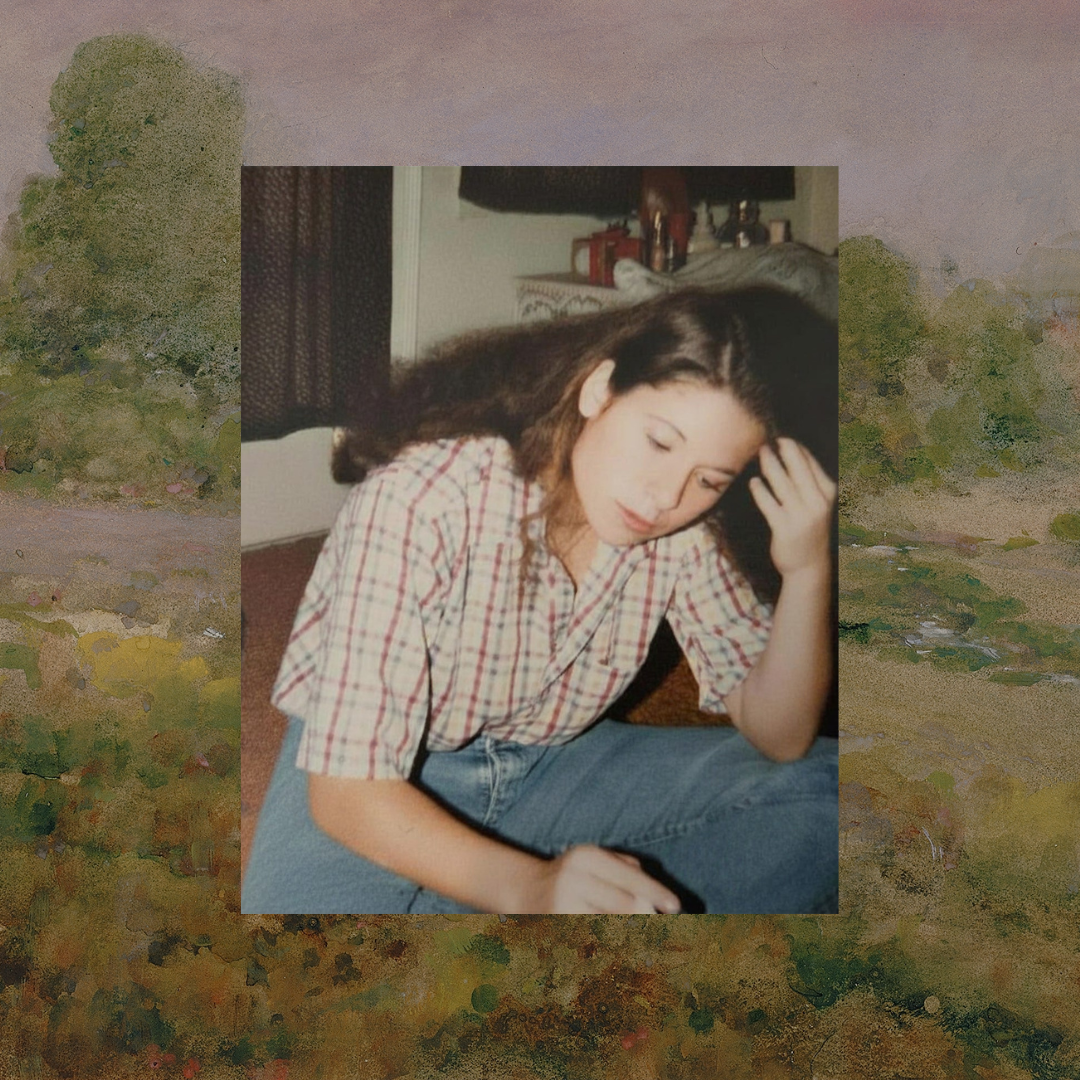
Photo courtesy of Deborah Rutherford. Painting: Field Of Varicolored Grasses In Late Summer, William Henry Holmes.
Somehow, I knew that purging would ruin my throat, and I wanted to sing. That helped me begin healing from bulimia by the time I reached college. Yet my endless longing did not go away. I found other ways to starve myself by filling up with the world, which never filled me.
My unresolved trauma and pain had an uncanny way of coming out first in an eating disorder, then in self-harm, and then in all kinds of ways that I used to numb the pain.
. . .
Years later, in a posh hotel room in Budapest, while working on a film there, I opened an old, familiar book I found in the hotel drawer. The rain splattered against the windowpane, and as I read the Scriptures, the Holy Spirit’s presence rushed over me. The stories of the paralytic, the bleeding woman, the prodigal son, and the woman at the well reminded me of my Savior, Jesus, the One who could heal me.
I write about this spiritual hunger in my poems, Starved Two Ways:
“I was starved for fields of love, banquets of joy, and cups that runneth over.”
What I discovered is that my hunger for love, belonging, and God was real, but my unhealed trauma led me to seek fullness in ways that only left me harmed and empty. But Christ is not one to leave us alone in the dark.
Isaiah 55:1–2 speaks to this emptiness when we seek things that will never nourish us, inviting us to be richly fed:
“Ho! Everyone who thirsts,
Come to the waters;
And you who have no money,
Come, buy and eat.
Yes, come, buy wine and milk
Without money and without price.
Why do you spend money for what is not bread,
And your wages for what does not satisfy?
Listen carefully to Me, and eat what is good,
And let your soul delight itself in abundance.”
In John 6:35, Jesus reveals Himself as the One who satisfies our thirst and hunger:
And Jesus said to them, “I am the bread of life. He who comes to Me shall never hunger, and he who believes in Me shall never thirst.”
Psalm 107:9 speaks directly to our longing souls:
For He satisfies the longing soul,
And fills the hungry soul with goodness.
. . .
What I know now, with what my friend Kimberly Phinney calls hard-earned wisdom, is that healing doesn’t mean I won’t ever struggle with my body again. Rather, healing has meant learning to see my body as a beautiful gift God has entrusted to me.
Because, without a doubt, our bodies will keep changing, but thankfully our God doesn’t. So, as I step out of the middle years and into the latter ones, this can become a season marked by fear or true delight. I hear God calling me into the excitement of a new frontier. As I trust in His faithfulness and loving-kindness, I am lifted up on the days when my body confronts me with its limitations and changes. One day, I will have an imperishable, resurrected body. Until then, I will honor this precious body God gave me. I will give her grace for the days when she doesn’t move as fast and see her grays and laugh lines as signs of a life well lived for her Lord.
Not that it isn’t hard. Believe me, when I attended a lakeside party in Tennessee this summer, I felt sheer terror at the thought of being in my tie-dye tankini bathing suit. Yet as the morning sprinkles cleared, God’s peace settled on me. I stepped onto the lush green grass and inhaled the fresh air, tuning in to lapping water, warblers, soft conversations, and splashes. And then, by the time my husband and I went on a September beach trip, I felt none of the body preoccupations I had felt summer-side.
Looking back, I can see how the lies I believed were leading me astray, but all the while, I can also see how Christ was drawing me into His healing love. God did not forsake me, and by His grace, I began to see that my deepest hunger was for Him. I now see that I was starving for love, joy, and the kind of fullness God gives.
Oh, dear Lord, teach us to listen carefully to You, receive what is good, and let our souls delight in Your abundance!

Photo courtesy of Deborah Rutherford. Painting: Field Of Varicolored Grasses In Late Summer, William Henry Holmes.
A Poem for Hunger
Starving
Oh, my sweet body,
so dewy-eyed and full of life,
how I starved and purged you.
It was never really you,
but a thief who got into my mind,
one who wanted to steal
our very essence
and do away with us completely.
But really,
I was starved for fields of love,
banquets of joy,
and cups that runneth over.
Even as I skated at the roller rink
on little white pills,
ate pies by the ocean,
and laughed till I was ill,
my heart was in disorder.
Only when I was empty
did I feel some purity; I was
vanquishing away
everything just as love
came to stay.
Oh, what irony
that I needed to empty myself
so I might be emptied out,
that I needed to torment myself
so that I might be loved,
that I would starve myself
because I was starved—
a ravenous binging and purging
of self-torture,
all to become worthy.
What tragedy!