
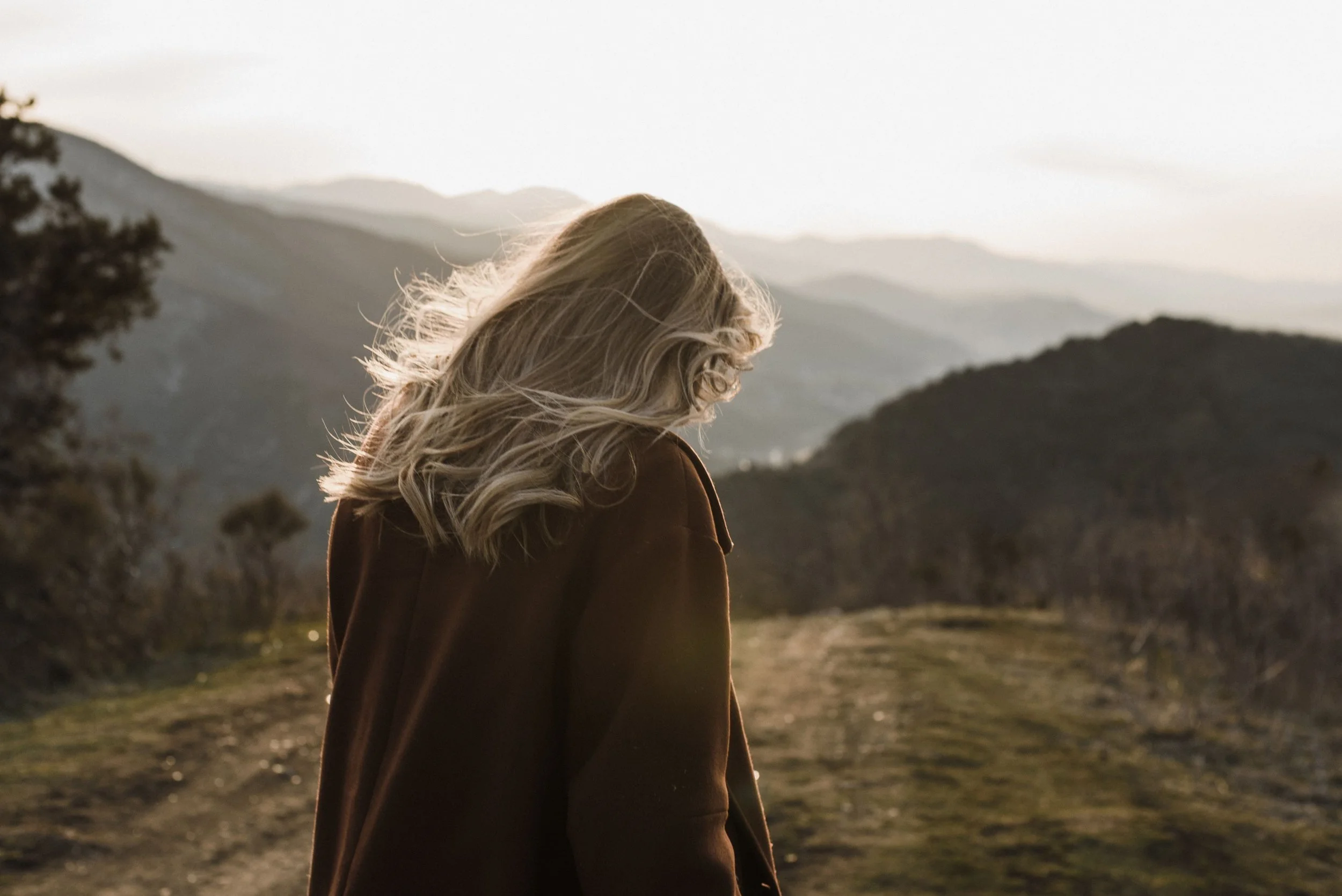
Photo by Arina Krasnikova
When I ponder the year of drought, what that would be in my own life, several seasons flit through my mind.
Years of feeling spiritually dry even though I was in the word on a regular basis.
The dark night of the soul that so many brothers and sisters experience.
Pouring my heart and soul into something to see no evident fruit at the end of my toiling.
But perhaps the “year of drought” that’s most prevalent in my mind is the years that were the most ordinary, in some ways, and so unordinary in others.
Covid was the first domino to tilt and fall, seeming to cause years of my plans gone awry. Shortly into marriage, living in Central Asia, we returned to the states to ride out Covid—which, at the time, many of us thought would only be a few months. When it became apparent that it was something much more, we allowed our plans to be shaped by the shifting tides and began to grow our family.
Down went the next domino when our son was born with heart defects and a genetic disorder, and another wobbled and fell with God calling us to Montana instead of back to Central Asia where we had left our hearts—and many of our physical belongings.
And for me, perhaps a quieter, more hidden domino was motherhood. My entire identity was uprooted. I didn’t identify with motherhood—but I was no longer not a mom either. It was like I was floating between two identities, my own completely unrooted. Every time I shared about my pregnancy with a friend or acquaintance, it felt like some strange out-of-body experience where I had to match my response to their joy at my news—and I inevitably felt shame in this. I struggled to value this new calling, but I knew it was wrong that I didn’t.
But motherhood asks so much of us—our bodies, our well-being, literally our good nutrients being sacrificed for life to flourish in another wholly dependent on us.
Our time, our sleep, our emotions, our autonomy.
Many of these had to be pried away from me—I wish I could say I eased into motherhood willingly, but despite my love for my son, motherhood felt unnatural.
And with my identity uprooted, so felt my relationship with God. The ways we used to connect were either impossible because of sleepless nights or dry because I was different. I didn’t know how to be in a mother’s body.
And much of this was internal—to speak it out loud was to condemn myself—or so I thought.
And then came more—a breast cancer diagnosis just after I became pregnant with our second son. I had barely acclimated to motherhood, and now I was fighting for my life while growing another one. I felt untethered and wholly unlike myself.
But my prayer life grew desperate.
God, I love my sons, but motherhood is so hard. I want to value it. Please, change my heart.
My prayers were not eloquent or thoughtfully articulated. I was a pregnant mom chasing a toddler in between chemotherapy appointments. I barely had time for a, please, help me, Jesus. But He knew my heart, my desire to see Him—to meet Him—in motherhood.
I think sometimes, we need to be uprooted to plant ourselves in richer soil. To flourish in a more nutritious garden.
I fought cancer and won, birthed a beautiful boy that brings sunshine into my home, and survived that first year of parenthood. My diagnosis was complicated, so the journey held a few more surgeries once I was cancer-free.
I walked through the darkest valley I’ve encountered yet, but all the while, Jesus held my hand. He wept with me, sat in the quiet with me, entered operation rooms with me, and loved my sons with me. All throughout, He formed me, showed me what intimacy with Him looked like, how to hear His voice more clearly.
The deep grief I experienced carved in me a deeper capacity for joy—and the ability to see beauty in ordinary moments. The mundane became the most sacred grounds for communing with the Holy Spirit who lives in me.
And somewhere in the journey, my heart was changed.
Motherhood was no longer an obstacle in my relationship with Him—but grounds for deeper intimacy and understanding of His regard for me.
As I left the dark valley, I felt God drawing my attention to Isaiah 61, a passage of restoration. He was promising beauty for the ashes, a blessing in place of the mourning. And end of the despair.
The years of drought were ending, and in their place grew this hopeful anticipation of a time of the Lord’s favor.
And in the righteousness impugned to me, I would be like a great oak, planted, rooted by the Gardener of my soul for His own glory.
It’s now been almost two years since I walked out of the years of drought. But looking back, they were anything but.
I see the fruit that flourished despite the heat, the heart that has grown more tender, the changes it has wrought on me and my life.
And I thank God that He loved me enough to uproot me and plant me anew, never abandoning me in the painful process.