How The Novel I Wrote Prepared Me For The Story I Lived

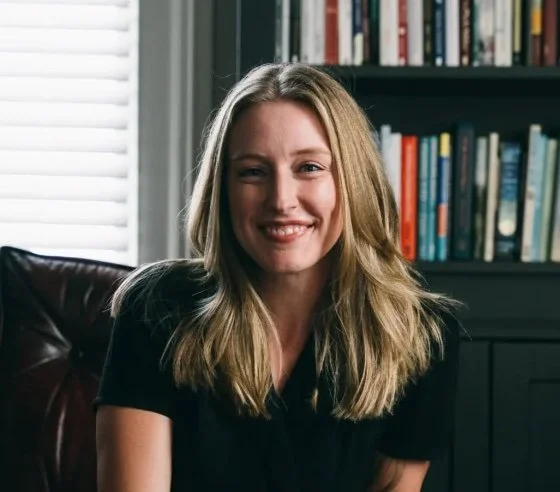
Photo by Hannah Olinger on Unsplash
I recently published my debut historical fiction novel The Brunswick, a story set in 1939 in my hometown of Norcross, Georgia. The book is inspired by a kindertransport — a group of children sent away from Nazi-occupied Austria to safety in America — and follows a variety of the experiences involved in such an undertaking.
While this book is historical and it is fiction, I never could have imagined how deeply it would impact and mirror my own very modern day, real-world life.
I spent years wrestling through the nuances of grafting families together as I wrote this story.
What hardships would lead a parent to send their child away? (What tenderness would I then feel for them?) How would someone who stepped in to parent feel? How would the child process it all?
And then, after the book had already been finished — actually, on the very day my final manuscript was approved by my publisher — four incredible kiddos joined our family in a foster-to-adopt situation.
Writing this book prepared me in ways I never could have expected!
Throughout this wild year (an understatement), we’ve never been more convinced of the need for deep community. We have been buoyed by ours in so many ways.
I wrote the letter below to friends just a month after our family doubled, and I’d love to invite you into this part of our story.
…
Dear friends,
I stood in the post office this week thinking about every single person surrounding me — the guy struggling through training at the computer, his frustrated boss, the young dad behind me. What traumas had they each experienced? What learning differences did they have? Had anyone walked alongside them through either?
I think often that even if we are the most loving, earnest family, we will still disappoint and hurt and anger our kids. And I realize that as good and safe as we make our lives, car wrecks or diagnoses or bad things will still happen.
But I think just as often now of repair, of the idea that this is where healing happens — that those who experience repair (even when — especially when? — they experience hard things) are more likely to thrive in the real world, to get jobs and have healthy relationships and to raise their own happy children one day.
All adults were kiddos once. And our kiddos will one day be adults. The thought is equally encouraging and terrifying.
We try to do so much on our own. With that in mind, I am continually embarrassed at all the people involved in making our family function right now. But I feel more confident than ever that this is a communal effort, that if we want those functioning (thriving!) adults one day, they’ll need a whole village of us.
This is true of every human, I’d argue — not just those in foster care. Every person deserves a safe, loving home where their brains and bodies can grow properly.
With these past four weeks behind me, I’d say children also need permanency — the idea that the safety they feel will continue and not be ripped away at any moment. We are wired for a “forever home.” In fact, the thing I hear most often from our new kiddos right now is either, “I don’t want you to leave,” or “Will you come back?
So how do we give them that? The repair, the healing, the permanency?
I heard a stat once that blew me away, and I verified it yesterday:
There are nearly 400,000 children in the US foster care system.
And, there are nearly 400,000 churches in our country.
Churches: places that claim the authority of Scripture, of verses like Defend the weak and the fatherless (Psalm 82:3) / Learn to do good; Seek justice, Reprove the ruthless, Defend the orphan, Plead for the widow (Isaiah 1:17) / Religion that God our Father accepts as pure and faultless is this: to look after orphans and widows in their distress and to keep oneself from being polluted by the world (James 1:27).
If every church had just one family who stepped into the calling of foster care, every child could have that repaired safety, permanency, healing.
But of course, it’s not that simple. The system is broken, as they say. Sometimes kids are placed back with a birth family that is not quite ready to parent. Or maybe they’re placed with a foster family who is unhealthy. Maybe the kiddos don’t adjust well. (These are all very kind ways to say very hard things.)
Another stat from Promise 686, an organization we’ve long loved and now love infinitely more: Only 50% of foster families continue past their first year. Of those with a Care Community wrapped around them to support, though, 90% continue.
Imagine if every church had just one foster family and then that church committed to that family’s health. What if they brought meals to provide the parents with time to actually connect as mom and dad, not just caretakers? What if they provided childcare so those parents could recalibrate, offered mentoring so the kiddos could form other healthy attachments? What if they relieved financial burdens, prayed and encouraged diligently, let the foster family know that they were not alone?
I think we’d have foster families in it for longer.
And I think, over time, we’d have kiddos that exit the foster care system because of found permanency.
And I think, over a long time, we’d have less kiddos even entering the system because we’d have more healthy, healed adults.
If just one family in a community was called to foster, and if that community then used their gifts to support them… just imagine.
…
I concluded the letter with a list of what our world currently looks like: Betsy driving the magic school bus for our afternoon carpools; Will building beds; Pete and Emily buying a lacrosse stick; Michal squeezing us into camp; Chuck and Barbara hosting us at the pool; Jonathan and Emily dropping off a deep freezer… and so on and so on and so on.
I kept thinking, we’ll be self-sustaining soon. But then I realized maybe we aren’t supposed to be self-sustaining. Maybe we’re supposed to do all of this together. Fostering and adoption, sure. But also, maybe just life.
We actually finalized our adoption the same week of The Brunswick’s release.
It became clear to my husband and I early on with The Brunswick — even before we became foster or adoptive parents ourselves — that the novel was to be used to encourage families who are navigating foster care or adoption.
There is just so much nuance. Grief and gratitude, big joys and really deep sorrows — sometimes all at once and all in tension.
So, with that as the backdrop, we’ve committed to giving all our proceeds from The Brunswick in grants to foster, adoptive, and preservation families to help with things like tutoring, counseling, and house updates — things that lead to repair and permanency and thriving for this generation and hopefully many more to come.
Our hope is that these grants will help fan the flame of community support and ultimately lead to many more soft places to land.
You can learn more about the book and these grants here.