Interview With Author Dixie Dillon Lane
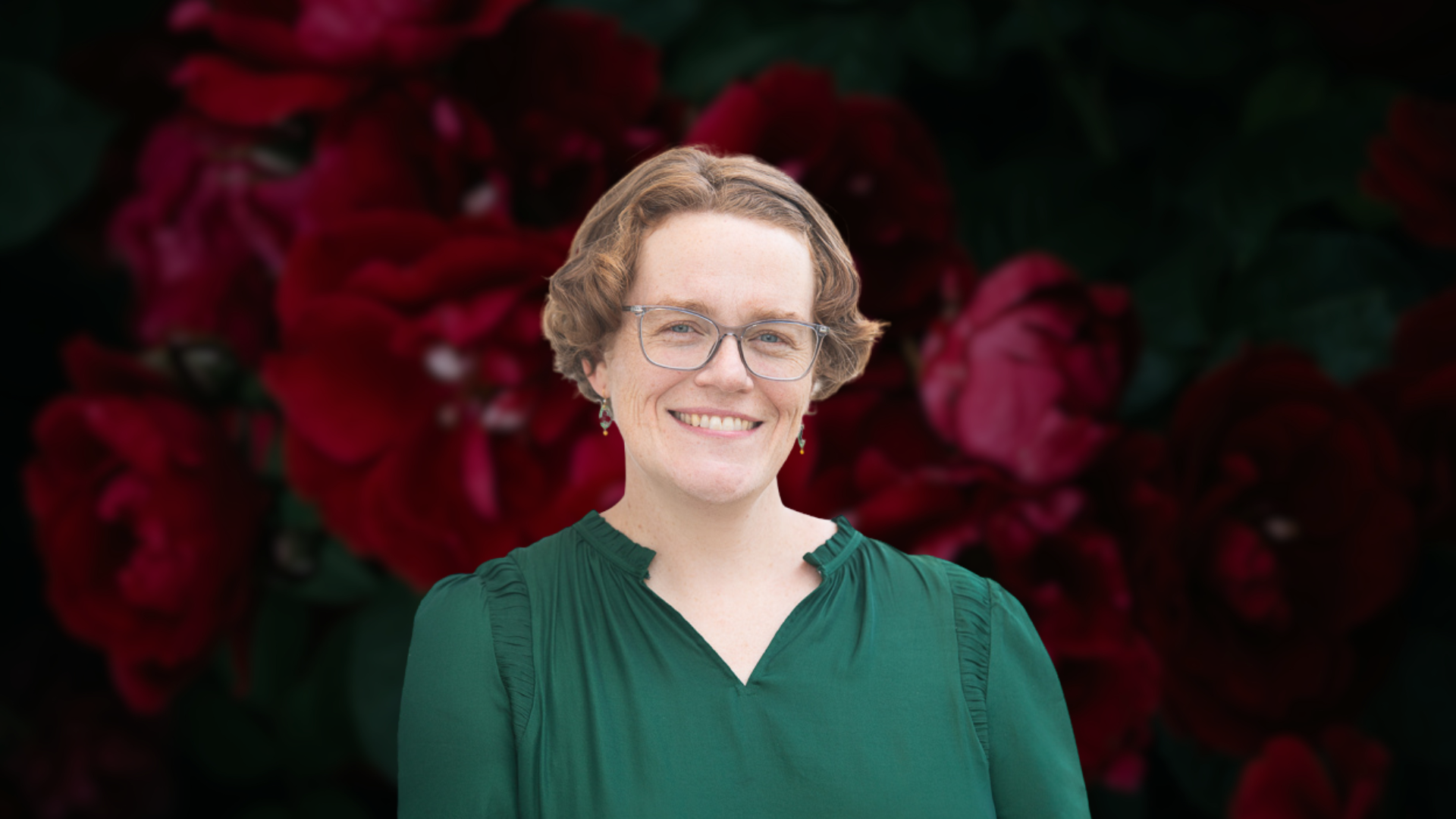
If you’ve been reading Wallflower for long enough, you’ve definitely come across one of Dixie’s wonderful articles, whether about faith and mental health, motherhood, or self-care. Ever since she submitted her first piece, I’ve admired and appreciated her depth of thought and ability to explore complex subjects in an approachable way.
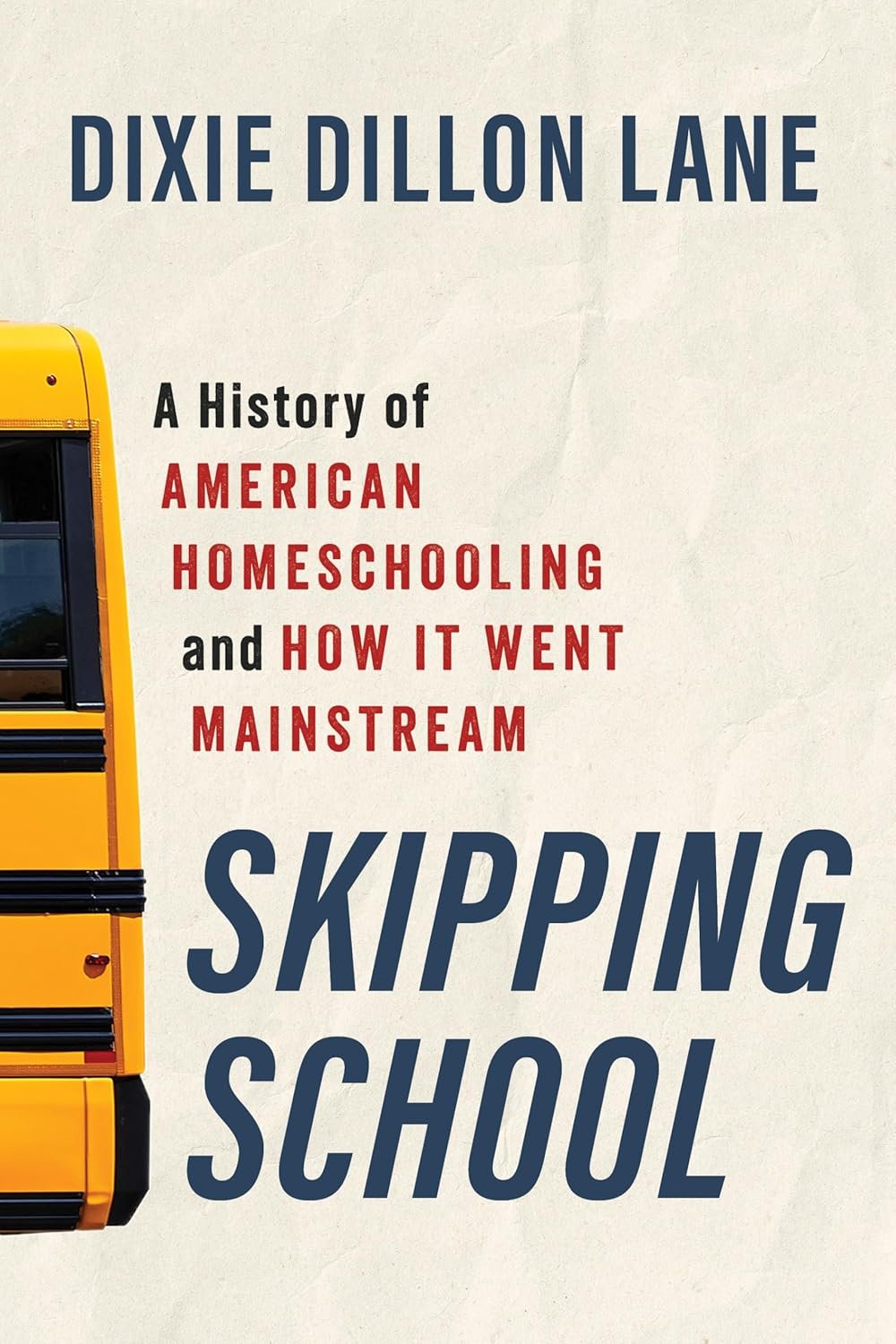
Which is why I’m excited that she recently released her first book, Skipping School: A History of American Homeschooling and How It Went Mainstream, and that she recently sat down with Wallflower to discuss the why behind the book, what surprised her most in writing it, and where she sees the future of homeschooling going.
Read on for our full interview.
Q: Tell us about your new book and what inspired you to write it.
A: If you’re like me, you’ve probably noticed that homeschooling seems to be all around us right now. Maybe you were homeschooled as a kid, or maybe you’re a mom and you are homeschooling your own kids; or maybe not! But in any case, you’ve probably noticed homeschooling’s growth, especially since 2020 (when its numbers suddenly doubled as many parents rejected Zoom schooling). I started my research on the history of homeschooling before 2020, and long before I ever had to make schooling choices for my own four kids. But what I really wanted to know was, Why do people homeschool, and where did homeschooling come from historically? I had a hunch that answering these questions would tell us a lot not just about homeschooling, but also about our country, families, education, and our national beliefs about school.
Eventually my research led me to write my new book, Skipping School: A History of American Homeschooling and How It Went Mainstream. Because guess what — homeschooling isn’t really unusual anymore! It’s something that all different kinds of families do, and in lots of different ways. But there are important patterns as to how and why they homeschool, especially having to do with family and local influence over education. Those patterns have deep roots in American history.
I’m a historian by training, so I wanted to make sure it was a rigorous book by scholarly standards, but I also wrote it for parents who are having to grapple with the really difficult state of education in America today. I wanted it to be recognizable to real people inside and outside of homeschooling, so I spoke to homeschoolers all along the way and tried to keep their stories front and center. It’s a book about people!
Q: What was most surprising to you as you researched the history of homeschooling?
A: Even though I was aware that homeschooling was always more diverse than stereotypes suggested, I was really surprised to discover how diverse. Racially, socioeconomically, even religiously — today it’s pretty close to what you see in the nation at large. In short, it has spread into the mainstream. That’s a huge change! And the size of it is astonishing — more kids are homeschooled than attend Catholic parochial schools these days, for example. It’s really something.
I also was really interested to dive deep into the question of socialization and homeschooling, which is a tricky and important question but is also used as a mic drop against homeschooling, as if it were impossible to socialize kids outside of schools. It turns out that there’s good data showing that homeschoolers, on average, are very engaged in community resources and activities like public libraries, plays, concerts, churches, etc., for example. Some data even suggest that homeschoolers are more engaged in these third places and activities than public schoolchildren!
This helped me understand that even though homeschoolers largely opt out of traditional public schooling, they haven’t opted out of public life. They’re part of the public. We need to stop thinking about them stereotypically and start asking ourselves who modern homeschoolers actually are and how they’re really behaving.
Q: What do you wish people who are unfamiliar with homeschooling knew about it?
A: I think the most important thing to know about homeschooling is that it can be a very enjoyable and widening experience. Sometimes people think of particular school choices as inherently limiting, but homeschooling presents an opportunity to try out different curricula and approaches and philosophies and see what works best for you. Some people take a school model of their choice and just implement that at home, but you can also experiment with different ideas and discover ways of learning you’d never thought about before. It can be really freeing and fun!
And yet just like regular school, it’s also not magic. It doesn’t always go well, or it might not be fitting for a particular time or for a particular family or child. It’s really common for families to move in and out of homeschooling, or to have some kids in school and some at home. Schooling (of whatever form) is a practice, not a virtue, so it’s good to be discerning and not freak out if what you’re doing for school (whether at home or “away”) isn’t working for your family at the moment. It’s okay to make changes. And schools and homeschools don’t have to be enemies! I talk at some length in the book about how this has all played out for my own family, too.
Q: What do you think the future of homeschooling looks like?
A: Homeschooling is currently growing, and that seems likely to continue for a while now. But governments are also always changing how they respond to homeschooling and its critics, and legislation is underway in some states to increase restrictions or regulations on homeschooling.
Homeschooling itself is also changing — it can look so different from family to family that it may at some point no longer be categorized as a single practice. I recently met a parent, for example, who considered his kids homeschooled even though the kids attended a co-op for several hours a day, four days a week. Is that a homeschool situation, really, or is it a microschool? Definitions vary. Public schools have also started popular homeschooling programs in the past 5-10 years, often through charter schools; and while some of these maintain the parental authority and influence that I consider to be the hallmark of homeschooling, some do not.
I do think homeschooling will only get more diverse over time, and that’s exciting to imagine — we need lots of different thinkers working on the problems of education in our country, and I think our school systems, too, will eventually benefit from the growth of alternative forms of education.
Q: Here at Wallflower, we always ask our women of note what their favorite book is. What’s yours?
A: My heart just went to my throat — how could I possible choose? Well, I have lots of favorite books, but since I have only one favorite short story, I’ll tell you about that, instead. It’s a story by Willa Cather called “Neighbour Rosicky.” If you’ve never read Cather’s short stories, you are really missing out – they’re varied and fascinating and wonderfully written! But this particular one really shows a combination of love and acceptance in the title character and his wife that I aspire daily to imitate. They seem to illustrate the secret of a good, rich life — they only care about what is true, good, and real. And so that’s what they live by.